A practical consumer primer on the popular disposable and what newcomers should know
This comprehensive guide is designed for curious shoppers and cautious beginners who are researching the ibvape 35000 Züge experience and trying to understand core health questions such as why are e cigarettes addictive. The aim here is not to promote vaping but to provide balanced, evidence-informed information that helps you make safer choices, compare options, and recognize the behavioral and chemical drivers behind addiction. Read on for technical performance notes, real-world safety considerations, and plain-language explanations of nicotine dependence and mitigation strategies.
Quick orientation: what “35000 Züge” implies and what to expect from a high-puff disposable
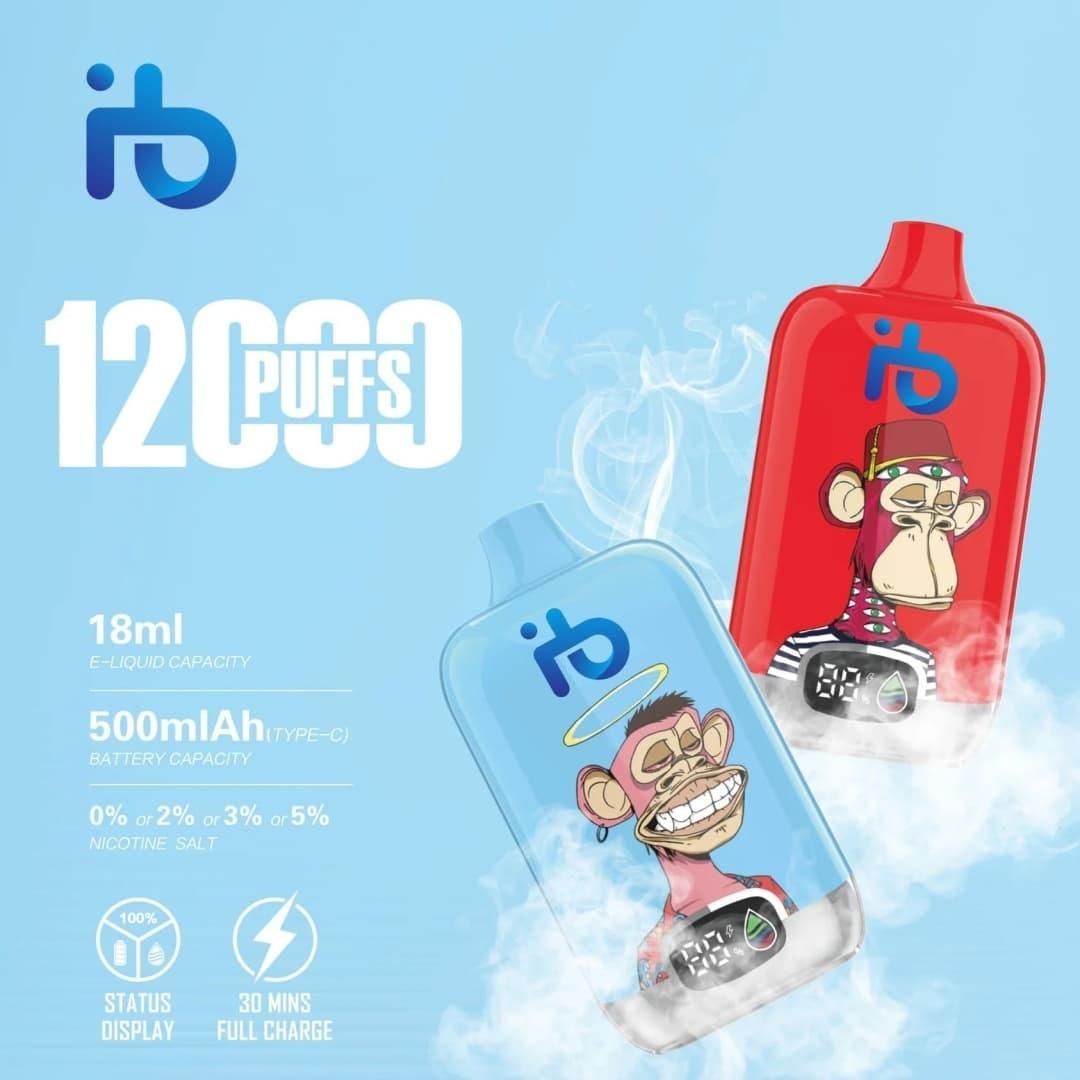
The label “35000 Züge” translates roughly to “35,000 puffs” in German and signals an ultra-high-capacity disposable device. In practice, actual puff counts depend on individual usage patterns, inhalation length, voltage delivery, and whether the device experiences leak or battery degradation over time. When you search for ibvape 35000 Züge online you’ll see marketing claims, user reports, and variable reviews — a reminder to read specification sheets and independent tests rather than rely solely on the manufacturer’s headline numbers.
Typical performance metrics
- Battery and power delivery: A device advertising thousands of puffs usually includes a high-capacity battery and efficient heating element; however, sustained power can translate to higher coil temperatures and potentially altered aerosol chemistry.
- E-liquid volume and formula: Large puff counts require substantial e-liquid reservoirs and commonly use nicotine salts for a smooth throat hit at higher nicotine concentrations.
- Flavor longevity: Even when devices advertise massive puff counts, flavors can fade; condensation, coil gunk, and flavorant depletion mean that subjective taste often declines before the unit reaches its theoretical puff limit.
- Real-world puff counts: Expect variability: some users report reaching numbers close to the advertised puffs under light use, while heavy users see lower totals.
How to evaluate claims and compare devices
Look beyond “35000” claims by checking for independent lab tests, user-submitted data, and credible review sites. Key things to verify: stated nicotine concentration, visible airflow design, whether the product uses nicotine salts or freebase nicotine, battery capacity (mAh), and presence of simple safety circuits. For SEO-focused keywords and clarity, remember to search both brand-model terms and the question why are e cigarettes addictive to get both device-focused and health-focused perspectives.
Safety considerations: battery, chemistry, and product integrity
When assessing safety, separate mechanical hazards from chemical risks. High-puff disposables concentrate both: larger batteries and longer-lived coils can increase the probability of thermal stress, while bigger e-liquid reservoirs amplify the total nicotine available in a single device. Here are key safety points every buyer should weigh:
- Battery quality and protection: Ensure the product includes overcharge and short-circuit protection. Cheap cells may lack stabilizing circuits and can fail under heavy draw.
- Nicotine quantity and labeling: Confirm whether nicotine concentration is expressed in mg/mL or as total nicotine content. A device with many puffs and a high nicotine strength can deliver a large cumulative dose.
- Contaminants and flavorings: Heating certain flavoring compounds at high temperatures can produce unwanted byproducts. Check for independent analyses that test for formaldehyde, acetaldehyde, and fine particulate matter.
- Leakage and physical wear: Large disposable reservoirs can be more prone to leaking during transport or with age, which increases accidental exposure risk to skin and children.
Why nicotine makes many vapers ask “why are e cigarettes addictive” — a focused explanation
Understanding addiction requires both biological and psychological context. Nicotine is a psychoactive alkaloid that binds to nicotinic acetylcholine receptors (nAChRs) in the brain, rapidly stimulating release of neurotransmitters like dopamine. The pharmacology is straightforward and relevant to SEO queries: when someone types why are e cigarettes addictive, they are looking for a concise link between chemical delivery and habit formation. Key mechanisms include:
- Rapid delivery: Modern e-cigarettes, especially those using nicotine salts or higher-power coils, can deliver nicotine to the bloodstream quickly — faster delivery strengthens conditioning.
- Nicotine salts vs. freebase: Nicotine salts are often smoother at higher concentrations, allowing users to inhale more nicotine comfortably. Devices marketed for high puff counts commonly pair with nicotine salts to sustain user satisfaction.
- Behavioral cues: Sensory rituals (hand-to-mouth motion, flavor enjoyment, social contexts) tightly couple the physical act of vaping to reward pathways, reinforcing use.
- Tolerance and withdrawal: Repeated nicotine exposure upregulates receptor systems and necessitates more nicotine to achieve the same effect. Withdrawal symptoms — irritability, anxiety, concentration difficulties — drive continued use.
- Product design and flavor reinforcement: Sweet, dessert, and fruit flavors can amplify nicotine’s reinforcing effects by enhancing the immediate sensory reward, especially for younger or new users.
How device features influence addictive potential
Not all e-cigarettes are equal in addictive potential. Devices with high power output, low-resistance coils, and nicotine salt formulations deliver nicotine efficiently and can therefore increase the likelihood that a user progresses from experimentation to routine use. A consumer searching for ibvape 35000 Züge should recognize that a long-lasting disposable paired with higher nicotine concentration is designed for sustained exposure — a combination with clear dependence risks.
Practical advice for new vapers who want to reduce dependence risks
Here are evidence-informed, pragmatic steps to reduce the risk of developing nicotine dependence while using e-cigarettes as temporary cessation tools or harm-reduction substitutes:
- Choose lower nicotine strengths: If you are not a heavy smoker, select a nicotine level that satisfies cravings without encouraging frequent topping-up.
- Monitor puff frequency: Track how many puffs you take per hour and aim to reduce the pace gradually; devices with claimed high puff counts can mask frequent dosing because the unit “lasts long.”
- Prefer refillable systems for gradual tapering: Refillable tanks and pods allow you to progressively lower nicotine concentration, whereas a prefilled disposable like an ibvape 35000 Züge often locks you into a fixed, potentially higher dose for its entire life.
- Use behavioral supports: Counseling, smartphone apps, or peer support groups improve quit attempts and reduce relapse compared to unassisted stops.
- Avoid dual use: Using e-cigarettes together with combustible cigarettes increases overall nicotine exposure and harms.
Health comparisons and harm reduction framing
For adults who completely switch from smoking to vaping, many health experts consider vaping to be likely less harmful than continuing to smoke, mainly because combustion produces tar and many proven carcinogens. However, “less harmful” is not “harmless.” When weighing devices that promise lengthy puff counts such as ibvape 35000 Züge, calculate total nicotine exposure and consider whether the product supports a planned taper or cessation strategy.
Tip: If your goal is to quit nicotine entirely, seek products and plans that allow dose control and clear endpoint objectives rather than indefinite replacement.
Technical section: airflow, coil chemistry, and aerosol particle size
Understanding engineering mechanics helps explain differences in satisfaction and health implications:
- Airflow and dilution: Open airflow cools the coil and dilutes the aerosol, changing particle size and deposition patterns in the respiratory tract.
- Coil material and temperature: Kanthal, nichrome, stainless steel, and ceramic each interact with e-liquid components differently; higher temperatures can increase thermal decomposition of flavorants.
- Particle size: Smaller particles can penetrate deeper into the lungs, potentially altering nicotine uptake speed and pulmonary exposure to other constituents.
Choosing between disposable and refillable for health-conscious users
There are trade-offs. Disposables are convenient and sometimes cheaper upfront, but produce more waste, have fixed nicotine content, and often lack detailed safety documentation. Refillable devices offer dose flexibility and may be more transparent about coil materials and e-liquid composition, making them preferable for a strategy aimed at reducing nicotine dependence.
Regulatory landscape and product quality
Regulatory scrutiny varies by country. Devices promoted with extreme puff counts like ibvape 35000 Züge have attracted attention for marketing that may appeal to youth. Verify compliance with local laws, child-resistant packaging rules, and testing standards before purchase. Independent lab reports that test for heavy metals, volatile carbonyls, and nicotine concentration accuracy are invaluable for consumers who want objective data.
Environment and disposal: another practical consideration
Disposable devices contain lithium batteries and plastic. Discarding many units accelerates environmental harm. Favor programs that accept used vapes for recycling, or use refillable systems to minimize waste.
Real-world checklist for buyers
- Confirm nicotine strength and total nicotine content.
- Seek independent lab tests or credible third-party reviews.
- Assess whether the product supports your quitting or reduction goals.
- Evaluate battery safety features and physical robustness.
- Consider waste and environmental footprint.
Community and clinical resources
If you are trying to quit or reduce nicotine, discuss options with a healthcare professional. Behavioral supports and, where appropriate, medically approved nicotine replacement therapies (patches, gum) can be effective alternatives to device hopping. Keep the question why are e cigarettes addictive in mind as you plan: pharmacology is only part of the picture; social context and habitual cues are powerful determinants of long-term success.

Signs that use has become problematic
Watch for increased frequency, inability to cut down, worsening mood when you don’t vape, or continued use despite wanting to stop. These are classic markers of dependence driven by nicotine’s pharmacology and reinforced by routine. For SEO emphasis, remember to include searches for ibvape 35000 Züge alongside queries like why are e cigarettes addictive to get a rounded information set.
Final practical takeaways: prioritize accurate product data, choose dose-flexible systems if you plan to taper, protect batteries from extreme heat, keep devices away from children, and use supportive quitting tools if dependence emerges. Balanced, informed decisions will serve both curiosity and health best.
FAQ
- Q: Can a device that advertises “35000 puffs” actually deliver that many useful puffs?
- A: Possibly, but real-world counts vary based on puff duration, device power, and manufacturing variability. Many users experience flavor fatigue or diminished vapor well before the theoretical total is reached.
- Q: If I switch to an ibvape 35000 Züge-style disposable from cigarettes, am I safe from addiction?
- A: No. Switching may reduce some combustion-related harms, but nicotine remains addictive. Understand why are e cigarettes addictive so you can plan a responsible taper if your goal is to quit nicotine entirely.
This guide emphasizes evidence, practical safety, and realistic device expectations so you can make an informed, health-conscious choice when evaluating high-puff products and when considering the behavioral implications of nicotine use.